What's the difference between afm and dfm
If you own a Chevrolet, GMC, or Cadillac vehicle, you’ve probably heard people mention AFM and DFM when talking about engine performance, fuel economy, or even reliability concerns.
At first glance, they sound like simple technical terms.
But for GM truck and SUV owners, understanding the difference between AFM and DFM is actually important—especially if you’re trying to figure out how your engine behaves, why it switches between cylinder modes, and whether a disabler device is right for your vehicle.
Quick Answer: AFM vs DFM
AFM (Active Fuel Management) and DFM (Dynamic Fuel Management) are both GM cylinder deactivation systems designed to improve fuel efficiency.
AFM shuts down a fixed group of cylinders (usually switching between V8 and V4 mode)
DFM is a newer system that can dynamically deactivate different combinations of cylinders based on driving conditions
In simple terms:
AFM is simpler and more “fixed”
DFM is more advanced and more dynamic

What Is AFM (Active Fuel Management)?
AFM is GM’s earlier cylinder deactivation system used in many V6 and V8 engines.
When driving under light load conditions, the system shuts off certain cylinders to improve fuel economy. When more power is needed, all cylinders reactivate.
What drivers typically notice:
Engine switching between V8 and V4 mode
Slight vibration during transitions
Noticeable change in exhaust tone
Improved fuel economy in highway driving
AFM is widely used in older and mid-generation GM trucks and SUVs.
What Is DFM (Dynamic Fuel Management)?
DFM is the newer and more advanced version of AFM.
Instead of switching between just two modes, DFM can deactivate and reactivate cylinders in multiple combinations depending on driving conditions.
Key difference:
AFM = fixed cylinder groups
DFM = variable cylinder control
This allows smoother transitions and more precise fuel optimization.
AFM vs DFM Comparison
| Feature | AFM | DFM |
| Full Name | Active Fuel Management | Dynamic Fuel Management |
| Cylinder Control | Fixed cylinder group | Multiple dynamic combinations |
| Driving Behavior | V8 ↔ V4 switching | Seamless multi-cylinder changes |
| Technology Level | Older system | Newer system |
| Common Models | Older Silverado, Tahoe, Sierra | 2019+ trucks, newer SUVs |

Which GM Vehicles Have AFM or DFM?
Most GM trucks and SUVs fall into one of these systems depending on the year and engine.
Chevrolet
- Silverado 1500
- Tahoe
- Suburban
- Camaro (selected models)
GMC
- Sierra 1500
- Yukon
- Yukon XL
Cadillac
- Escalade
- Escalade ESV
Important: The same model can have different systems depending on year and engine configuration.
How to Tell If Your Vehicle Has AFM or DFM
Many owners get confused here—because engine size alone is not enough.
You can identify it by:
Model year (very important)
Engine configuration
GM platform generation
VIN / build sheet
RPO code (for advanced verification)
In general:
Older models are more likely AFM
2019+ models often use DFM (especially SUVs and newer trucks)
Is DFM Better Than AFM?
Technically, yes.
DFM is more advanced because it can control cylinders more precisely, which leads to smoother transitions.
However, from a driver perspective:
Some owners still notice behavior changes during driving
Cylinder deactivation is still happening
Driving feel may not always be consistent depending on conditions
So “better” depends on what you value:
Fuel efficiency → DFM wins
Simplicity and consistency → AFM feels more predictable to some drivers

AFM / DFM Concerns Owners Often Report
Across GM truck and SUV communities, drivers commonly discuss:
V4/V8 transition feeling
Slight hesitation during mode switching
Exhaust sound changes
Long-term reliability concerns (especially lifters)
Oil consumption discussions
Important: These experiences vary by vehicle condition, maintenance, and driving style.
Can You Disable AFM or DFM?
Yes—there are several approaches:
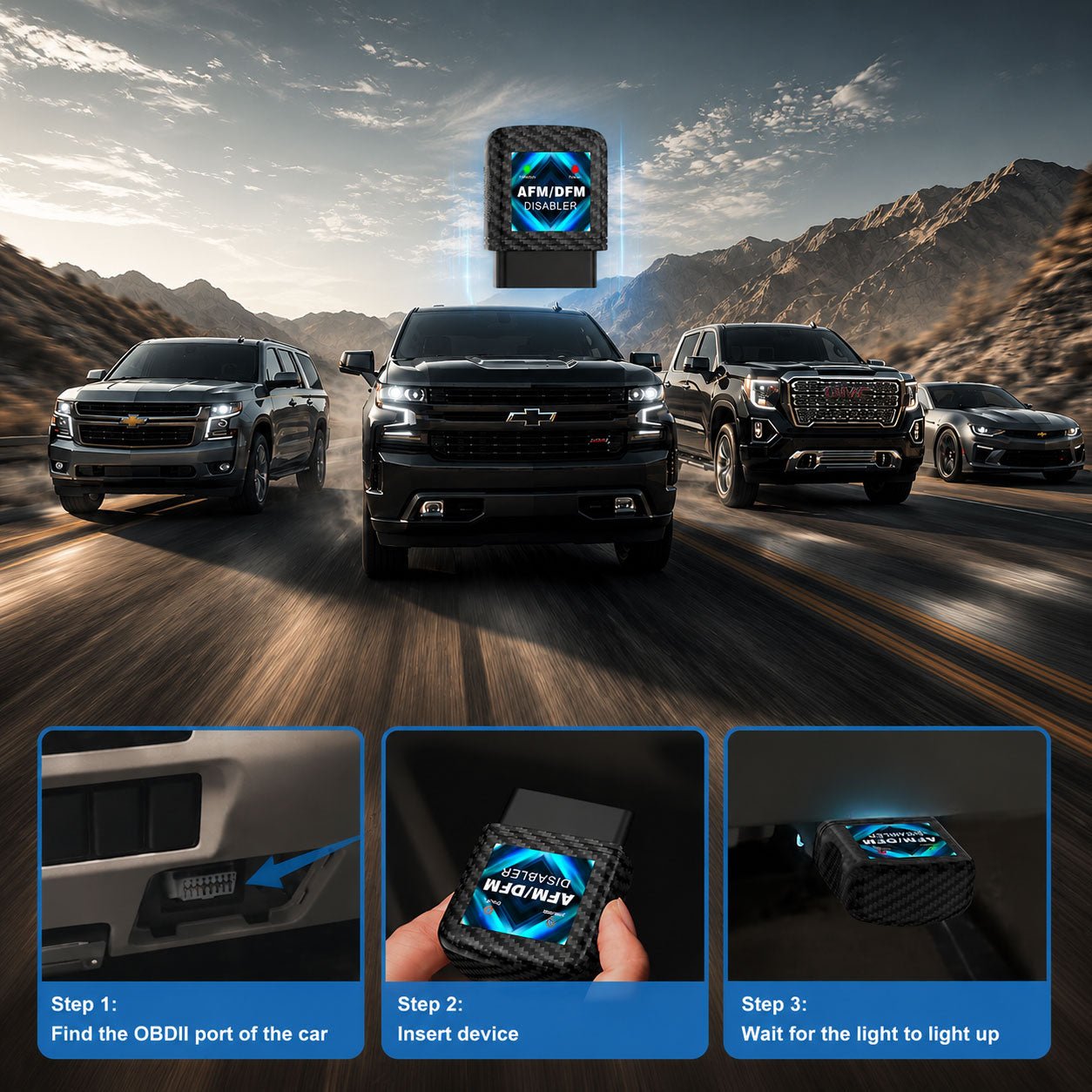
1. Plug-in Disabler (Most Popular)
Connects via OBD-II port
Prevents cylinder deactivation
Reversible and non-invasive
2. ECU
Software-based changes
More permanent changes
3. Mechanical AFM-related repair
Physical engine modification
Most invasive option
For many daily drivers, plug-and-play disablers are the most common choice due to simplicity.
Which Disabler Do You Need?
This depends heavily on your vehicle:
Older AFM vehicles → standard AFM/DFM disabler
2021+ SUVs or newer platforms → may require updated DFM module
Refresh trucks (2022.5+) → specific compatibility required
That’s why Checking Compatibility before purchase is essential.
Final Verdict: AFM vs DFM
AFM and DFM are both GM cylinder deactivation systems designed to improve fuel economy, but they differ in how they control cylinders.
AFM = simpler, fixed switching system
DFM = newer, more dynamic cylinder control system
For GM truck and SUV owners, the most important factor is not just understanding AFM vs DFM—but knowing which system your specific vehicle uses before choosing any solution.
Next Step
If you want to understand whether your vehicle is compatible with an AFM/DFM disabler, the next step is to check:
Your vehicle year
Model
Engine configuration
Then match it with the correct solution for your GM platform.